



The Ozone Layer, Politics and Lobbies
The Montreal Protocol on the protection of the ozone layer earned its reputation for at least four essential reasons:
- The text includes precise timetables for phasing out ozone-depleting substances.
- The Parties to the Protocol developed mechanisms to monitor and control its implementation.
- The creation of a Multilateral Fund to provide developing countries with the assistance needed to meet their obligations. Donor countries have consistently financed it, allowing this crucial effort to effectively eliminate ozone-depleting substances to continue.
- The well-understood interests of the major chemical groups in this elimination process.
There are, of course, other reasons for the Protocol’s success, which is regarded as exemplary compared with a great many international environmental agreements.
A great man stood behind this exemplary agreement: Dr Mostafa Kamal Tolba, who passed away not long ago. He was Executive Director of UNEP (the United Nations Environment Programme). His persistence, his tireless efforts to bring opposing positions closer together, and his highly refined diplomatic sense in the service of negotiation made it possible, one day in September 1987, to give birth to the famous Montreal Protocol. He once kept us locked in a room with hundreds of delegates until the early hours of the morning, until the final text was reached. The last time I saw him again was in Cairo, a few years ago, at the celebration of International Ozone Day. I wish to pay tribute to him here.
While there is reason to rejoice in this success, I cannot ignore certain elements of nuance which show that, despite everything, some interests were not sacrificed on the altar of environmental protection.
I certainly will not claim to know every ins and outs of how the Protocol has been implemented, nor to explain every decision taken by the Parties, whether at their annual meetings or through the committees they created — most notably the Executive Committee responsible for administering the Multilateral Fund. Nevertheless, my presence for nearly thirty years at a countless number of meetings gave me the privilege of observing the many twists and turns that have marked the Protocol’s journey. Better still, first as my country’s representative, then as an active member of an implementing agency, I was involved in a number of decisions my organisation was tasked with carrying out. That is to say how often I was confronted, not to say unsettled, by elements far removed from the prevailing air of innocence surrounding the Montreal Protocol.
At the same time, I would not want to give the impression of turning my back on a programme to which I devoted the greater part of my career, nor to show any ingratitude for the exceptional privilege of having been one of the actors in the implementation of the Montreal Protocol. For this Protocol is an example of international cooperation that stands, today, as a reference.
My only concern is to show that it would have been possible to go further in this cooperation, had interests that are, after all, understandable, given the world we live in, not come to taint this shared passion for protecting our planet. Unfortunately, one must, every time, contend with powers devoid of any qualms and try to wrest scraps of idealism from them. As long as the aim, each time, is to strike a balance between economic demands and the need to protect the environment, our planet will always have to endure assaults that will weaken it further. To be sure, there has been considerable progress in the growing awareness that the planet is in danger, and efforts are being made, however imperfectly, to safeguard it. But let us not fool ourselves: economic and financial powers remain determined to treat profit and power as untouchable constants. Past events, as well as the most recent ones, show that they have no hesitation in fanning the flames of conflict to secure their domination of the world.
I want to offer a testimony here: even for a matter as grave as protecting the ozone layer, detours were preferred, even though solutions that were both less costly and more beneficial to our environment existed from the very outset.
Unfortunately, once again, we had to contend with economic interests which, in my view, cost us precious time in rehabilitating the ozone layer. Transitional solutions did admittedly help reduce the threat, but they also generated profits that are rarely discussed. One could always argue that this was an unavoidable step on the way to developing more satisfactory substances, except that it has been proven such substances always existed. Natural substances were replaced by chemical ones which, a few decades later, turned out to be harmful to the ozone layer. These substances were produced by major chemical groups such as Dupont, Elf Atochem, Honeywell, Bayer, ICI, and others, which for a long time reaped staggering profits and held a near-monopoly over the manufacture of refrigerants, insulating or propellant agents, fire retardants, herbicides, agricultural soil sterilisation products, and so on.
While common sense and wisdom called for a return to the natural solutions used in the past — hydrocarbons, carbon dioxide, water, or indeed soil solarisation, biofumigation, soilless cultivation — these same groups used their enormous economic and political influence to impose supposedly new molecules said to be less destructive to ozone. While bringing their new products to market, they launched so-called “transitional” substances — that is, ones with a lower destructive potential, but destructive all the same. For some fifteen years, these substitute ozone-depleting substances flooded world markets, including in developing countries, which in principle were meant to rely on Multilateral Fund assistance to finance their conversion operations. It goes without saying that the replacement technologies and products were supplied by these same chemical groups, which sought a quick return on their investments — even though these were not as substantial as they claimed, since it was simply a matter of tweaking the original molecule to reduce its harm to the ozone layer.

Thus thousands of companies around the world converted, at a cost of billions of dollars, to produce refrigeration equipment, aerosols, solvents, insulation foaming agents, or pesticides containing transitional molecules meant to reduce the threat to the ozone layer. And when some of us tried to break this monopoly by promoting natural substances — notably in domestic refrigeration, by introducing cyclopentane as a foaming agent for refrigerator wall insulation and isobutane as a refrigerant — a mischievous disinformation campaign was set in motion, under cover of household safety. Videos more convincing than reality itself showed a small leak of a few grams of hydrocarbons in a refrigeration system triggering, on contact with a spark, an explosion in a kitchen. This had the effect of delaying their introduction, while transitional substances quietly continued on their way. We nevertheless managed to persuade a number of countries — Algeria, Argentina, Iran, Cameroon, Egypt and Syria among them — to introduce hydrocarbons into domestic refrigeration.
But stubborn resistance had to be overcome within the Executive Committee of the Multilateral Fund, dominated by donor countries, in whose meeting-room corridors the lobbies of the chemical groups are very much present. We were helped in this by an effective outreach campaign led by the influential NGO Greenpeace, nicknamed “Greenfreeze”. It was only many years later, however, that hydrocarbons became broadly established in domestic refrigeration — ironically, even the all-powerful United States Environmental Protection Agency now recommends isobutane and cyclopentane. Unfortunately, the same cannot be said for air conditioning, including for residential use, on the pretext, once again, of the substance’s flammability. But who worries about the safety of the housewife, particularly in developing countries, who uses a butane or propane gas cylinder with an average capacity of 13 kilograms, the explosion of which is often devastating? Why do we downplay building explosions caused by town-gas leaks, while insisting on the danger of a leak of a few hundred grams of gas from a refrigerator or an air conditioner?
For my part, I am convinced that this is simply a matter of protecting and preserving a lucrative market for chemical substances, and that the preservation of the ozone layer serves merely as a screen for developing, again and again, new molecules often derived from simple tweaks to those that already exist.
Another significant example is the wavering observed over the replacement of a pesticide such as methyl bromide, a broad-spectrum fumigant used worldwide since the 1930s as a pre-planting treatment against insects, pathogens and weeds, as well as against insect infestation in buildings and commodities. It is also used in quarantine applications and pre-shipment treatments for perishable goods. Although banned under the Montreal Protocol, this substance continues to be used, mainly in industrialised countries, through exemption and critical-use nomination requests submitted each year to the Parties.
Although it has been shown that methyl bromide could be replaced in almost all applications, the dedicated technical options committee continues, against the criticism of several countries, to grant exemptions — whereas in developing countries, none are tolerated. I need only point to the case of Mexican farmers, ordered to abandon methyl bromide in strawberry cultivation, while their North American neighbours enjoyed the famous, less costly exemptions, in the name of the sacrosanct rule of competitiveness. I still remember that farmer who came from his home state of Florida to give, at a Meeting of the Parties in Rome, a dubious demonstration of the need to keep methyl bromide as a soil treatment. Aside from the fact that it was, to say the least, surprising to invite an individual to address a plenary meeting of the Parties, the methyl bromide lobbies had mobilised to provide him with all the logistics needed for his presence in Rome. Better still, I was given a stern reminder by a senior official of the United States Department of Agriculture when I expressed doubts about this farmer’s arguments. He was sitting discreetly behind my delegation and had missed nothing of my exchange with one of my colleagues. He reminded me of my duty of restraint as a United Nations official.
Yet it is well established that natural methods — solarisation, steam pasteurisation, biofumigation, soilless cultivation, the use of resistant strains, or heat treatment of stored commodities — must compete with new molecules meant to replace methyl bromide. My organisation was the undisputed leader in assisting numerous developing countries with this replacement, and natural conversion methods were always given priority there. Our project in Morocco, which succeeded in bringing together fruit and vegetable producers and exporters, the Ministry of Agriculture, agronomic research institutes, foreign agricultural companies, soil-treatment experts and laboratories, led to the creation of a centre for producing resistant strains, disseminating new treatment methods, and training producers, including independent ones. This centre became a model for many other developing countries, and a concrete example of technology transfer in every sense of the term, far from the standards imposed by technology holders. As was our project in Mexico for converting the metered-dose inhalers used to treat respiratory conditions such as asthma. We first approached the four holders of the replacement technology: two of them refused any transfer to a developing country, while the other two demanded royalty payments and thirty years of technology protection. But thanks to proven local expertise, we managed to negotiate with a valve manufacturer — the essential component in propelling an exact dose of medication into the bronchial tubes — an entire series of trials of a new propellant gas with no harmful effect on the ozone layer. These trials led to the development of a valve meeting health standards. This successful project had repercussions for inhaler manufacturers in developing countries, who adopted a similar replacement method, far removed from the dictates of multinationals.
Even more perverse is the exemption allowing the use of methyl bromide for quarantine and pre-shipment treatment of perishable goods for export — an exemption that, once the import is legally permitted, actually conceals the possibility of using this substance for other applications, such as soil treatment. It is no secret to anyone: trade in methyl bromide, although diminished, is still ongoing. Some claim this is simply a way of using up remaining stocks — which is oddly reminiscent of the continued availability of DDT, decades after its ban.
The Montreal Protocol also provides exemptions for other ozone-depleting substances (ODS), for applications considered essential, notably in the military and space sectors. It is worth noting that production and consumption inventories of these substances make very little reference to uses in the military industry, which is nonetheless very present in many countries. The Protocol generously grants a confidentiality clause that is rarely challenged. In other words, protecting the ozone layer must accommodate small exceptions in the name of reasons of state.
Another, even more troubling aspect, which has drawn the attention of numerous NGOs, concerns obsolete ODS stockpiles scattered around the world, particularly in developing countries. These sizeable quantities, euphemistically called “ODS banks”, deteriorate over time and vent into the atmosphere. Several studies have shown the urgency of addressing them, on pain of seeing all of the international community’s efforts to rehabilitate the ozone layer wiped out. The Parties to the Protocol, aside from a few demonstration projects, have never managed to agree on financing for their elimination in developing countries. Ironically, there is no obligation to report stockpiled quantities, which makes any credible inventory opaque. On top of this come all the temptations of illegal trade in stockpiled ODS, whether as virgin substance or contained in equipment such as refrigerators, freezers or air conditioners. Who knows how many such appliances have been sold off clandestinely, at low prices, in developing countries? Numerous examples have been brought to the Parties’ attention, and even though sometimes heated debates have taken place, no serious measure has been adopted, apart from the possibility, for countries victimised by this illegal trade, to report it.
I myself witnessed the arrival, at the port of Douala in Cameroon, of hundreds of used refrigerators containing ODS, refurbished and destined to be sold on the local market. These appliances, bound for destruction and apparently coming from Europe, were of course offered at unbeatable prices. By a twist of fate, I was in Douala to inspect two refrigerator and freezer manufacturing plants that had received financial and technical assistance to convert to substances harmless to the ozone layer. The managers of these plants were panic-stricken at the thought of being unable to sell their new appliances, whose cost was far higher.
Today, how can one explain that, after a few years of transitional substances dominating the market, other molecules appear, almost similar, but miraculously stripped of their chlorine radical, responsible for destroying stratospheric ozone? Nor is it surprising that, in 2007, an amendment to the Montreal Protocol hastened to regulate the phase-out of transitional substances in developing countries, providing for additional financial support — all of it backed by scientific presentations, each as learned as the next, meant to demonstrate that this phase-out would help close the ozone hole. This amendment was hailed as historic, and the international community congratulated itself on having taken a decisive step in protecting the ozone layer.
I remember the very tight negotiations to finalise this amendment, particularly the acceptance of conversions in enterprises that had already received funding to adopt transitional substances. Donor countries showed themselves understanding and generous in acceding to the wishes of developing countries — the main thing being to reach this agreement, so as to flood the markets once again with new molecules, but this time with no ozone-depleting potential. That, however, was without reckoning on the discreet but formidably effective influence of the Executive Committee of the Multilateral Fund, which, through brilliantly orchestrated conditions, narrowed the scope of the amendment and minimised its financial impact as much as possible. The phase-out plans for transitional substances, and particularly their phase I stages, suffered considerable delays before being adopted, despite very tight reduction schedules (a freeze followed by a 10% reduction relative to baseline consumption). The main thing, it seemed, was to get the movement started.
But that was without reckoning, once again, on the ingenuity and inventiveness of the chemical groups, which barely four years later declared that these new molecules, despite having zero potential for destroying stratospheric ozone, had the unfortunate defect of a very high global warming potential. Something like a major “scientific revelation” that no one had seen coming. Once again, renowned scientists were called upon to explain how undesirable these molecules could be in the context of climate change. We were told that eliminating them would represent, by the end of the century, an effort equivalent to 10% of all those needed to avert the climate threat, and would bring about a reduction in global temperature of 0.5°C — which, it must be admitted, is considerable. So influential countries such as the United States and Canada, joined by Mexico, a few small island states worried about rising sea levels, then by the European Union, proposed another amendment, this time to eliminate the molecules meant to replace the transitional ones. This rather unusual situation was being negotiated at the very moment when the phase II stages of the transitional-substance phase-out plans were being submitted to the Executive Committee for review.
This amendment obviously comes with the introduction to the market of new molecules, with no ozone-depleting potential and a reduced global warming potential — in short, transitional substances ahead of the release of yet other molecules with very low global warming potential. It goes without saying that this potential remains disconcertingly relative, since to this day no one has ventured to set a threshold beyond which it would be unacceptable — setting one would irrevocably condemn certain molecules already on the market. This explains the hesitations in negotiations that have now dragged on for more than four years, the time needed to put the finishing touches to yet other substances with convoluted formulas and names, supposedly respectful of both ozone and climate.
US President Obama himself was called upon to convince the Chinese and Indians to join the movement and be more conciliatory in the negotiations. While China seemed to go along with a new amendment — in exchange for concessions that were not long in resurfacing — India gave ground and accepted an arrangement similar to the one negotiated with China. The rest of the world then had very few arguments to make, and had no choice but to negotiate a financial amount promised in proportion to the technological stakes involved. Once again, donor countries showed themselves very open about their contribution to the Multilateral Fund, all while counting on their representatives on the Executive Committee to reduce it as much as possible. They also counted on the group tasked with determining the new amendment’s financial needs — a group working under opaque conditions, which has always striven to provide figures based on inventories that are difficult, if not impossible, to verify. It devises formulas to estimate, over three years, funds by category of use sector, invariably producing an overall figure close to four hundred million dollars, even though needs vary from one period to the next. But everyone knows that this is a figure fixed in advance by certain influential donor countries, the group’s mission invariably consisting of justifying it after the fact. Of course, developing countries have never stopped contesting these figures, but lacking the ability to produce convincing arguments for higher sums, they had no choice but to resign themselves to asking for a small top-up — granted, of course, by the donor countries, who would then stress the extremely generous nature of their offer.
I have always been shocked to hear certain delegates present their contributions as a kind of offering, if not charity, when this is meant to be an agreement acknowledging the unavoidable nature of a shared but “differentiated” responsibility — the funds allocated representing only a small fraction of the damage caused by the technologies sold to developing countries. Unfortunately, many representatives of developing countries perceive this financial contribution as an act of “charity”, rather than as a hard-fought aspect of an international agreement. They remain defenceless against the many means deployed by donor countries whose unity is rarely found wanting, while representatives of recipient countries often come to meetings poorly prepared, with little grasp of the real issues underlying the negotiations. Most often, they content themselves with mock discussions they struggle to master.
Even more distressing is the nonchalance, or indeed the scant real interest, shown by certain representatives of developing countries on the Executive Committee, where they are supposed to represent their respective continents. They sometimes arrive without documents, rushing to collect them from the Secretariat to consult them in a hurry, while the meeting is already well under way. They then find themselves utterly caught off guard, resigned to following the debates as best they can, with no real chance to contribute. How many times have we heard, not without shame, interventions devoid of any substance, sometimes entirely beside the point. In their place, I have always felt a certain humiliation in the face of the sarcasm and discreet mockery of other representatives. Pride of place surely goes to the passionate intervention of a representative from a developing country, at a Meeting of the Parties in Vienna in October 1995: she appealed to the international community to help her country fight against… desertification! The poor woman had mistaken the conference. The unrestrained laughter that erupted in the room caused this diplomat great pain.
But it must also be said that, despite everything, these representatives face developed-country delegates with unequal weapons. Their resources are derisory, they rarely have reliable data with which to mount serious counter-arguments. Worse still, they rarely receive instructions from their own governments, and only their instinct or experience can guide them through the labyrinth of texts, skilfully maintained by the donor countries. I have seen them wander like lost souls through the corridors of the great conference halls, often resigned. Very quickly, they abandon the negotiating field to focus on their private interests. How many times have I caught some of them checking personal emails, or irrelevant websites, while matters directly concerning them were being debated. I even recall a sad and regrettable anecdote: that of a representative I had asked to defend a project in his own country, who was unaware that this very project was before the meeting he was attending — proof that he had not even read the working documents. Of course, there have always been exceptions, gifted and brilliant individuals, but unfortunately, after two or three meetings in which they had distinguished themselves, they curiously vanished from the circuit. This is doubtless one of the misfortunes of several developing countries: this capacity to sideline their own elites.
My own country excels in this regard: on many occasions, I have seen delegates appear out of nowhere, sometimes even disconnected from the very subject they were supposed to be negotiating. Some even had the indecency to collect their mission allowances on the very first day of a conference, only to vanish immediately afterwards.
There are, of course, countries such as China, India, or other emerging economies such as South Africa, Indonesia, Malaysia, Brazil, Senegal and many others, which are holding their own and managing, however imperfectly, to shake the hegemony of industrialised countries. But there remains much ground to cover before one can hope to see these negotiations balanced. I am convinced that day is drawing nearer, and even faster than it seemed only a few years ago. I am equally convinced that, for the good of our planet, all countries will have to play a decisive role in the choices to be made for its future. The recent Paris Climate Conference showed encouraging signs in a growing number of developing countries taking ownership of global problems, despite an agreement often judged to be rather hollow.
Unfortunately, as international civil servants, and under the pretext of neutrality, we have always been forbidden from giving advice to representatives of developing countries, from enlightening them on the issues at stake. And even when we strove to get around this prohibition, the fact remains that, without an appropriate framework to organise them and prepare them to better grasp the key points for discussion, such efforts remain fragmentary, without significant impact. For my part, I lobbied donor-country representatives to add value to the negotiations, by allowing the United Nations’ specialised agencies to train elites in developing countries in what are, after all, fairly simple negotiation methods and techniques. I tried to convince UNEP to organise, on the sidelines of regional meetings of Ozone Unit officers, discussions on ongoing negotiations. To no avail: no serious initiative was ever taken in this direction. I did try to organise meetings at our organisation’s headquarters in Vienna, to which Ozone Unit representatives were invited to debate current topics. But this was merely a flash in the pan, quite insufficient to hope for a reversal of the trend. Such gatherings would have had to be multiplied for them to bring about a decisive shift in the negotiations. Unfortunately, the costs of continuing to organise them were too high for an organisation such as mine. I also had to accept the obvious: once again, Vienna drew people more by its charm and beauty than by the topics up for debate.
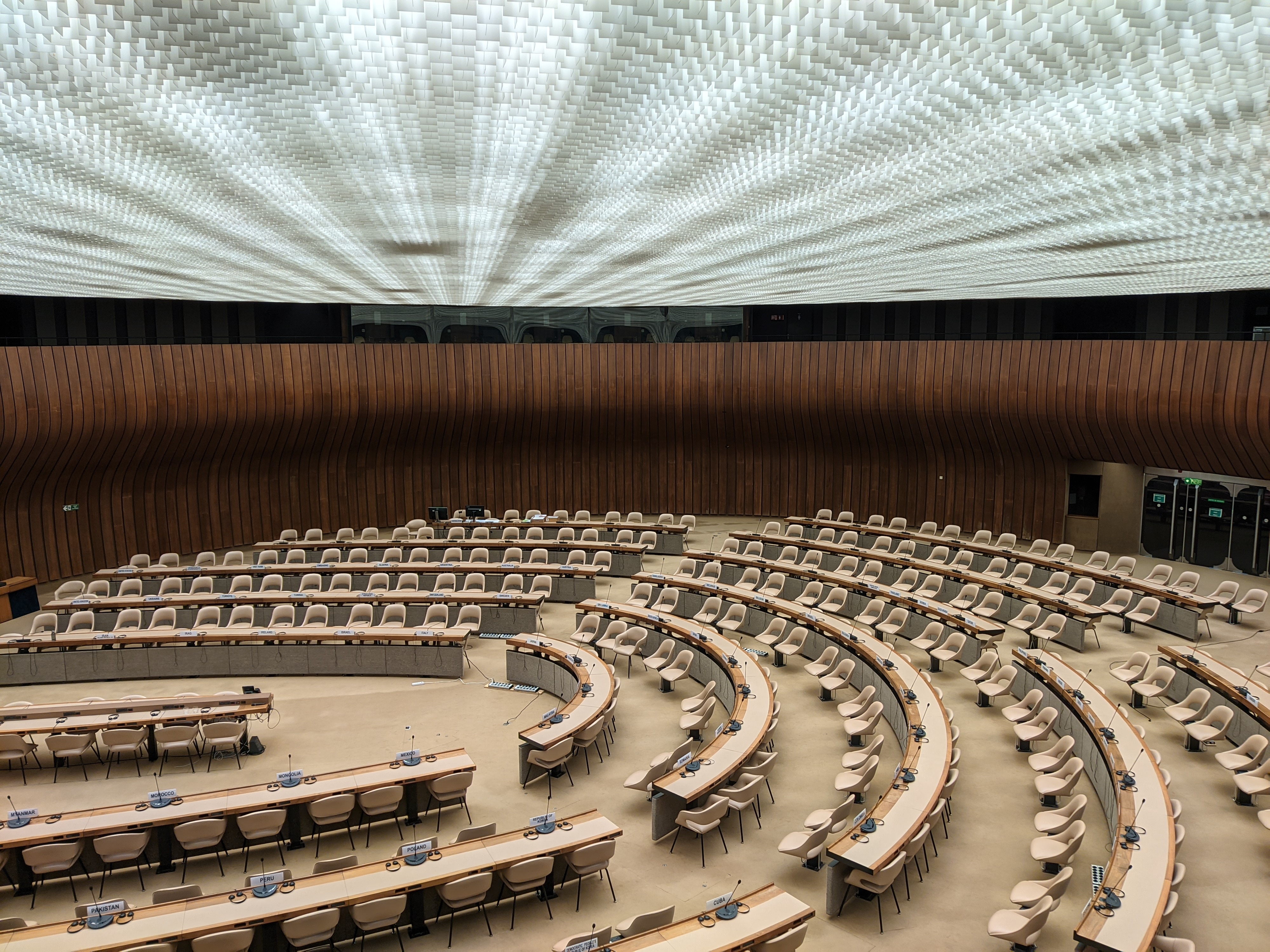
Unfortunately, we continue to observe relationships of domination which, in my humble opinion, are not such as to bridge the immense gulf separating our two worlds. And yet, one might have hoped that, when it comes to the future of the planet, every good will would be welcome — but interests, both economic and political, remain more than ever the chief arguments in environmental negotiations. I, for my part, regret that the noble and generous idea that emerged at Rio in 1992, declaring the planet’s resources shared by all, remains to this day utopian. I have many times witnessed selfish, even criminal behaviour, and I retain in my memory a few recollections of absurd and barely comprehensible situations.
On this subject, I recall the bombing, in March 1999, of the city of Belgrade by NATO forces. Cooling the launch systems for the projectiles required thousands of tonnes of Halons — a powerful ozone-depleting substance — while, at that very moment, the Executive Committee was negotiating projects to eliminate a few hundred tonnes of those same Halons. This same Executive Committee, moreover, refused us a conversion project at a refrigeration company in Montenegro, on the specious pretext that the break-up of the former Yugoslavia made it impossible to confirm that Serbia and Montenegro was indeed a Party to the Montreal Protocol. Despite the clarifications provided by the late Indian Madhava Sarma, then Executive Secretary of the Ozone Secretariat, assuring that the country was indeed a signatory to the Protocol, the Committee overrode this and rejected the project. It is worth noting that the Ozone Secretariat never again took a similar initiative afterwards — such bravado was not to be repeated.
How, too, can one understand the reluctance, if not outright opposition, to assisting countries under embargo, such as Libya, Iran, Cuba or North Korea — as if the ozone layer had borders with these countries? What of Iraq, which for years was systematically denied all assistance, including the right to sit as an observer? Yet after the second Gulf War, the Executive Committee did not hesitate for a moment to approve a multitude of projects, with no concern for their execution in high-risk areas. Who, today, could state with certainty that Iraq complies with the Protocol’s obligations? But why worry about that, since the main thing was to show that this country was now within the norms?
For my part, I am proud to have always insisted on the neutral character of an environmental convention, and presenting projects in these countries was an absolute constant in my approach. It was impossible for the Executive Committee to deny this character and, despite a few attempts at dissuasion, it approved our projects. We, in turn, had to prove through our determination that these projects were viable. But there always comes a moment when such persistence exacts its price.
It so happened that one day, the representative of Japan on the Executive Committee placed before my eyes an article from a Japanese newspaper referring to a supposed chemical weapons expert, a former member of our team. He stated, without batting an eyelid, that we had, through a project, supplied equipment and materials that could enable North Korea to manufacture chemical weapons of mass destruction — no less. Though surprised by this extremely grave accusation, I could not believe that a basic conversion project could carry such ambitions. Despite my explanations as to the entirely harmless nature of the project, the Japanese diplomat insisted, through the Executive Committee, that we provide irrefutable proof that the equipment and services did not contravene the rules set out by the United Nations Panel of Experts on the embargo. He also threatened to request, at the Meeting of the Parties to the Montreal Protocol, the withdrawal of our organisation as an implementing agency. As the matter took a dramatic turn, we had to resign ourselves to producing a report of more than three hundred pages, meticulously detailing every piece of equipment and material delivered under the project, in order to demonstrate that their composition, both chemical and physical, in no way permitted the manufacture of chemical weapons. This report, compiled within a week and certified by the United Nations Panel of Experts, was a model of exemplary project execution; its scientific and technical content, as well as its clarity, were praised by the Executive Committee, which decided to close this unfortunate case.
What must be deplored, however, is the passivity of our organisation, which at no point offered us the slightest support. On the contrary, we were given to understand that we would be well advised to demonstrate our “innocence”. I believe that, beyond the discomfort caused by this sordid incident, our organisation’s conduct affected me deeply, revealing a certain ill will towards us — despite the undeniable success of our programme, we would not have been spared the slightest error. Had the Executive Committee not refused to yield to pressure from one of its members, the affair could have spiralled well beyond the usual bounds of the assistance that was our primary mission.
But it must also be said that, over the many years I spent alongside the Committee’s members, it developed relationships of genuine camaraderie, even friendship, which never faltered. Despite diverging interests, human relations always prevailed, in an atmosphere of respect and good humour. Rare were the occasions when a member lost his composure — diplomacy always regained the upper hand.
The moving tribute paid to me on the eve of my retirement from the United Nations, along with the many prizes and honours I was awarded, were for me the ultimate reward, one that filled me with pride. It was, no doubt, recognition of my modest contribution to the Committee’s remarkable work. I could not have dreamed of anything more gratifying than these gestures of friendship towards me.
I also salute the high degree of professionalism shown at all times by the members of the Multilateral Fund Secretariat. They consistently displayed a deep understanding of the scientific, technical and financial aspects of the projects we submitted to them. Credit for this goes unquestionably to a great man, the Egyptian Dr Omar El Arini, who built a Secretariat of the highest calibre. Dr Omar El Arini, and a member of the Committee, the American Paul Horowitz, were its most remarkable figures, and their work left an indelible mark on the Multilateral Fund’s exceptional reputation. I always greatly enjoyed my exchanges with the Secretariat, sometimes endless and at impossible hours, exchanges which proved highly instructive for both sides. Its members had a particular way of raising counter-arguments to minimise costs, or to render ineligible equipment we deemed essential. For our part, we had developed often unstoppable defence techniques, which allowed us to reach compromises acceptable to all. Together, we enabled the Executive Committee to draw up guiding principles that stand as a reference today — one that many international conventions envy.
I am also proud to count, in a great many countries, sincere friends, who always made a point of welcoming me with open arms during my many professional travels. They never failed to highlight my unwavering commitment to their respective countries; I am not sure I was able to repay them, even a little, for the generosity and hospitality with which I was surrounded on each of my visits.
I retain unforgettable and extraordinary memories — of incidents, of comic moments, but also of intense emotions — from the some one hundred and twenty countries I had the privilege of visiting. I will mention places where insecurity was a daily concern, such as Côte d’Ivoire, where I found myself, with a colleague, confronted by a fake roadblock set up by a band of armed and hysterical young men. We got out of it by offering a few hundred euros. In Pakistan, although the roads were far from safe, I took it upon myself to visit, with fear in my stomach, remote areas. In Mozambique, at a time of political uncertainty, I travelled to a refrigerator manufacturing plant, about a hundred kilometres from Maputo — there was only a poorly maintained track, close to areas of rebel activity, and the journey, with an experienced guide, took what felt like an eternity. In Guatemala and Honduras, during periods of great instability and high insecurity, we visited isolated farming operations, protected by private armed militias. In Nairobi, Kenya, I found myself, along with a number of representatives, confined to the hotel following popular riots that lasted three days — foreigners had been killed, including an ambassador’s wife, beheaded in her own garden.
In Calcutta, I visited, with dismay, a wretched district of the city, mockingly nicknamed “the City of Joy”. The nightmarish vision of this extreme poverty haunted me for months — I could not believe that human beings could fall into such degradation. But the most extraordinary thing is that they found the strength to smile and keep going, against every elementary rule of life. At the invitation of a man of impossible-to-determine age, I found the mental strength to enter his hut, built on stilts to avoid the dense mass of excrement blocking the paths — the pestilential smell it gave off would have repelled the toughest of souls. He lived with his wife and five children in a space so cramped that I struggled to squeeze in. They offered me a glass of curdled milk and a hunk of bread, which I did not dare refuse. Despite their utter destitution, they drew from deep within themselves the strength to show generosity and hospitality. I pay tribute here to Mother Teresa and her modest army of sisters, for their immense courage and the sacrifice of their own lives to relieve, even a little, the suffering of hundreds of thousands of the destitute. This was for me, as in other wretched corners of the planet, a lesson in life: these humblest of the humble were capable of offering you what “they did not have”. In their extreme poverty, they always kept, in their eyes, that spark of life that disarms me. I tell myself that it is, in fact, thanks to all these souls sacrificed on the altar of the god called Economy that the rich continue to grow richer. They submit to rules laid down by others, and their toil serves only their own, ultimately relative, survival, for they brush against death at every moment of their wretched daily lives. How many times have I asked myself which to save first: the ozone layer, or this humanity adrift?
Another journey that gave me an intense emotion was the one I made to Israel, and Jerusalem in particular. My late father had always cherished the dream of visiting this holy place, a visit that had been denied him because of war. I once surprised myself by promising him I would go in his name, even though, deep down, I knew this promise was impossible to keep. And yet, one day, as a United Nations official, I had the extraordinary good fortune to travel to Jerusalem and the West Bank, for a project to assist the Palestinian Authority. This idea was born of a discussion in Geneva with Israel’s representative at the Meeting of the Parties, a certain Rony Serri, who assured me of his support for setting up a small assistance project for the Palestinian ministries in charge of Industry, Environment and Agriculture. I did not have the pleasure of meeting him in Jerusalem, since a month after our conversation, he was killed in a road accident in Barcelona, where he was on holiday. I still remember his wish to make, through my organisation, a gesture towards the Palestinians; he had given me dates harvested from a palm grove that had once belonged to a great Palestinian family. As a poor practitioner of my faith, the prayer I performed at the Al-Aqsa Mosque filled me with immeasurable emotion, and in the nearly empty hall, I saw my father’s smiling face. Beyond the injustices and humiliations suffered by the Palestinian population, of which we had been witnesses, this moment of devotion alone had a moral resonance that, even today, moves me deeply. Even today, when, as a senior adviser and expert to the United Nations, I meet again, at international meetings, all these friends encountered along my travels, they hasten to come and greet me, and I feel a genuine pride in having preserved, with them, this simple and warm friendship.
To return to the new HFC amendment, there is reason to fear that, once again, powerful lobbies will strive to perpetuate this chain of chemical substances, to the detriment of natural substances that have nonetheless proven effective and less costly in most applications. Despite having zero ozone-depleting potential, another close to zero in terms of global warming, and undeniable energy efficiency, they remain under-used. Certainly, progress has been made, and awareness is growing, but greater perseverance than ever will be needed. That is why my commitment continues through SHECCO (European Union, Brussels), a young but ambitious organisation working to promote natural refrigerants. Their determination and enthusiasm have already convinced me of the soundness of our positions, and I am confident that natural substances will, in the years to come, experience unprecedented growth — driven no longer by the constraint of international texts, but by the finally acknowledged evidence that they have always been the simplest, safest, and most environmentally respectful solution for our planet.
Si Ahmed Sidi Menad, President of TAFELWIT